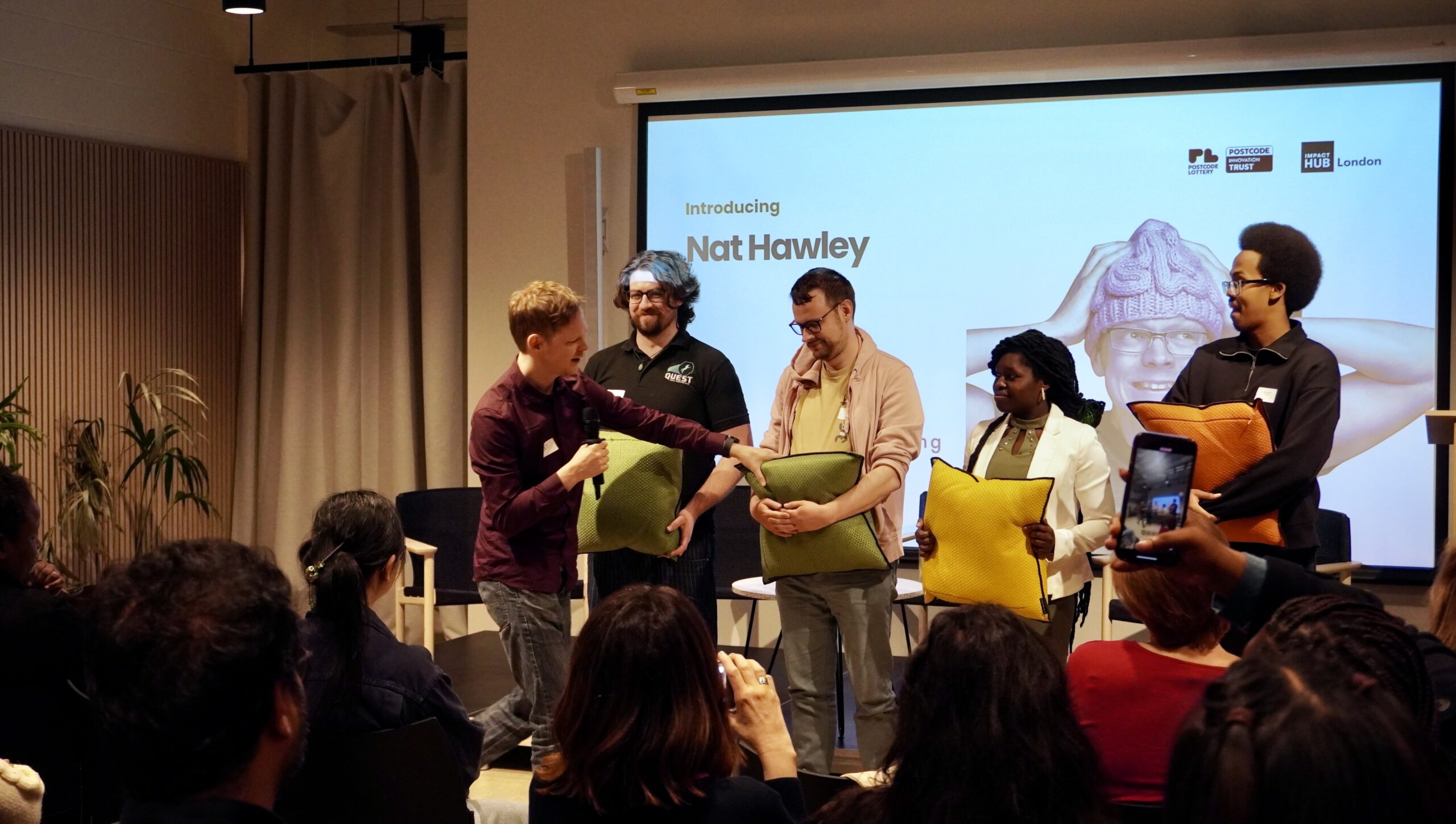
One of the things that we love doing at Impact Hub London is championing the people who make the hub what it is, whether that is our wonderful members, our brilliant partners or the innovative entrepreneurs we get to meet through our programmes.
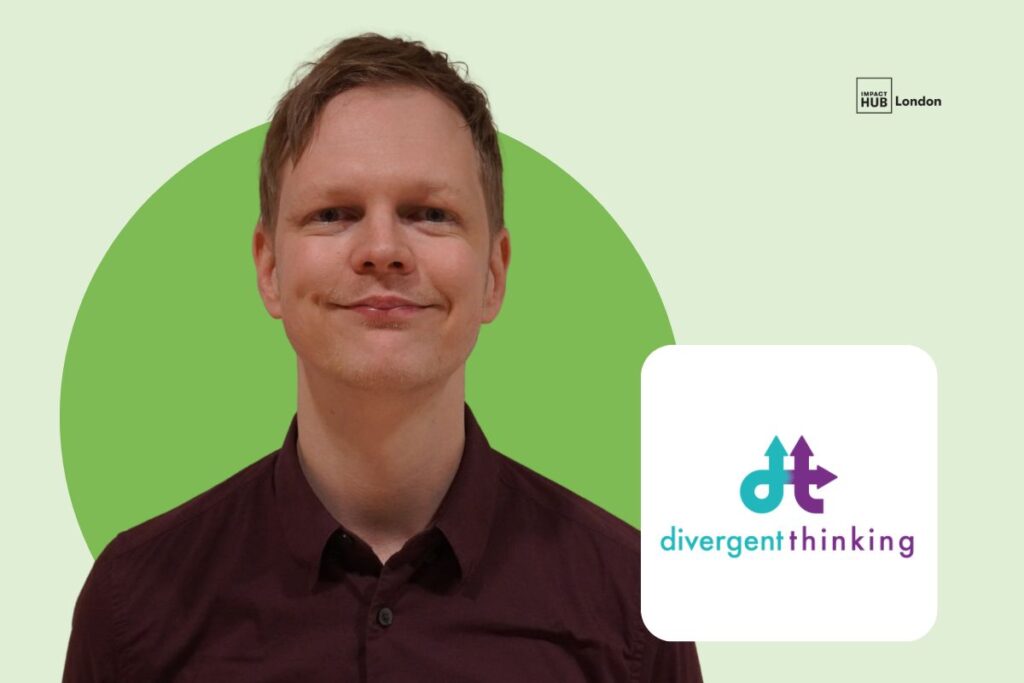
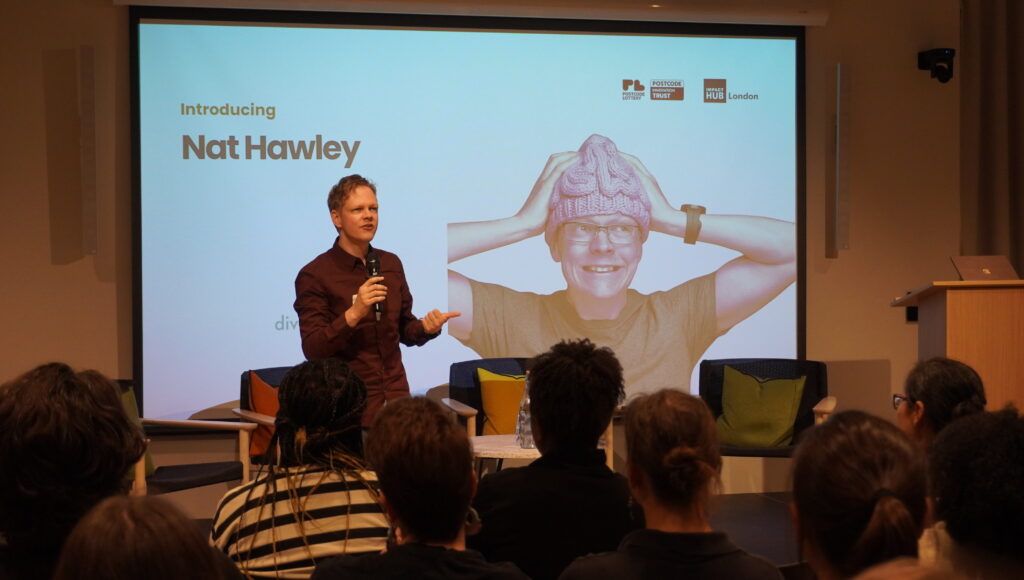
Today, we want to introduce you to Nat Hawley, the founder of Divergent Thinking. Nat has joined our Together for Wellbeing programme as part of the 2026 cohort. He brings with him his brilliant business, which focuses on helping organisations better understand neurodiversity.
The work Nat does is vital; an estimated 15% of the UK population are neurodivergent [1]. And organisations not understanding the different and brilliant minds we all have can shape many things, including employment. Research suggests that 31% of people with a neurodiversity condition are in employment compared to 54.7% of disabled people overall [2], and whilst there are many reasons for this, ignoring the fact that unsuitable environments are a contributing factor ignores a big part of this issue.
So, let’s learn more about Nat, Divergent Thinking and his why.
Please introduce yourself
I’m Nat Hawley, Founder of Divergent Thinking. I’m a neurodiversity consultant, speaker and facilitator with a Master’s in Applied Neuroscience. I’ve spent over a decade supporting organisations to better understand neurodiversity and create workplaces where different minds can thrive.
I’m also neurodivergent myself, so this work is both professional and personal. My approach combines lived experience, neuroscience, practical workplace insight and a real belief that inclusion should be clear, human and usable, not just a policy document gathering dust.
And tell us about your social enterprise, Divergent Thinking...
Divergent Thinking is a neuroinclusion consultancy helping organisations understand, support and value neurodivergent people at work.
We deliver neurodiversity training, manager workshops, consultancy, workplace needs assessments, neuroinclusion audits and speaking engagements. Our work supports organisations to reduce unnecessary barriers, improve communication and build cultures where people do not have to burn out, mask or constantly translate themselves to be understood.
We work with employers, public sector organisations, charities, education providers and teams who want to move beyond awareness and create meaningful, practical change.
What is your why for doing the work you do?
My “why” is rooted in the gap between potential and experience.
So many neurodivergent people are talented, creative and capable, but end up being misunderstood because workplaces are often designed around narrow assumptions of how people should communicate, focus, learn or perform.
I know what it feels like to be underestimated because your brain works differently. I also know what becomes possible when someone understands you properly, gives you the right environment and stops trying to force you into a version of “normal” that was never real in the first place.
I do this work because neurodivergent people should not have to break themselves to belong.
In an ideal world, what impact do you want your social enterprise to have?
In an ideal world, Divergent Thinking would help shift workplace culture from “How do we accommodate difference?” to “How do we design work better for human beings?”
I want organisations to understand neurodiversity as part of how we think about leadership, communication, wellbeing, creativity, productivity and fairness.
The long-term dream is that fewer neurodivergent people are pushed out of education, employment or leadership because of avoidable barriers – and that more organisations see cognitive diversity as something to understand and work with, not something to manage around.
"In an ideal world, Divergent Thinking would help shift workplace culture from How do we accommodate difference? to How do we design work better for human beings?”
Nat Hawley
What is the real-world impact of your social enterprise?
Our impact is practical and immediate. After our sessions, people often tell us they feel more confident having conversations about neurodiversity, better equipped to support colleagues, and more aware of how small changes can reduce stress, confusion and exclusion.
We help managers understand how to make communication clearer, meetings more inclusive, recruitment more accessible and adjustments more normalised.
At its best, the work creates a ripple effect: one manager changes how they give instructions, one team redesigns how they run meetings, one employee feels less alone, one organisation starts to see inclusion as everyday behaviour rather than a separate initiative.
Why did you want to join the Together for Wellbeing programme?
I wanted to join Together for Wellbeing because Divergent Thinking is at a really important stage of growth.
I’m building the organisation independently and want to make sure it grows in a way that is sustainable, values-led and genuinely useful to the people and organisations we support.
The programme felt like a brilliant opportunity to learn alongside other social enterprises, strengthen the business model, sharpen our impact and explore how neuroinclusion connects with wider systems around mental wellbeing, work, inequality and belonging.
What is the link between neurodiversity and mental wellbeing?
The link between neuroinclusion and mental wellbeing is huge.
When neurodivergent people are misunderstood, unsupported or expected to constantly mask, the cost is not just professional, it is emotional and psychological. Poor communication, unclear expectations, sensory overload, inaccessible recruitment and stigma can all contribute to anxiety, burnout, low confidence and exclusion.
But the reverse is also true. Clearer communication, flexible working practices, psychologically safer teams and better understanding can make a real difference to people’s wellbeing.
For me, neuroinclusion is not just about helping people “perform better” at work. It is about reducing the unnecessary stress and harm created by environments that were never designed with different minds in mind.
Tell us something about yourself not related to your work
Something slightly different: before moving more fully into neurodiversity and social impact work, I worked in television and media production, including projects connected to the London 2012 Olympics, BBC Breakfast and youth media. Storytelling has always been a big part of my life, and I think that still shapes how I approach this work now, helping people understand complex topics through stories, examples and human connection. I’m also a gigantic Beatles fan, and my favourite animal is a rabbit.
How can you learn more about Nat and Divergent Thinking?
My TEDx talk, “Why we need neurodiversity”, is now live and explores why the idea of “normal” is often far less helpful than we think.
TEDx talk: https://youtu.be/Fx2-VHDLJT0?si=IrVn4AFdvBbL_DeU
Useful links:
Follow Nat on:
Thanks for reading all about Nat and his social enterprise – we can’t wait to update how he gets on over the next 6 months.
If you want to read more about the cohort, you can do so here.
Sources:
[1] https://neurodiversity.directory/neurodiversity-statistics/
[2] https://www.gov.uk/government/news/employment-prospects-for-neurodiverse-people-set-to-be-boosted-with-launch-of-new-expert-panel