
Sustainability is considered to be “meeting the needs of the present without compromising the ability of future generations to meet their own needs” as defined by the United Nations Brundtland Commission in 1987.
Now, across the globe and in the UK, it’s hard to not feel that progress on sustainability feels frustratingly slow.
We are seeing that global temperatures continue to rise, environmental targets are being delayed or quietly made to be less ambitious and political leaders wage war on net zero commitments.
In parallel, many individuals and organisations feel overwhelmed, questioning “well what can I do?” with a lack of certainty where responsibility sits. More alarmingly, 20% of young people feel that it is too late to fix climate change.
It is not a surprise that there may be an increasing air of doubt of whether people feel they can make a meaningful difference.
But this feeling isn’t a failure of information or intent, but the barriers to sustainability can be deeply human. To understand why sustainability is so difficult to embed at scale, we need to look beyond policy and technology, and start considering the role of psychology, behaviour and social systems.
The challenge of thinking long-term
Humans are not naturally wired to prioritise distant outcomes over immediate rewards – we are not always placed to think long-term. This is a cognitive bias known as temporal discounting, which is defined by how a reward loses value if the results are longer term.
So given that climate change, biodiversity loss and environmental degradation largely unfold over decades, it’s no surprise that the impact can sometimes be undervalued. Unfortunately, this leads to a significant barrier in sustainability goals.
The benefits of action today are often abstract, delayed or felt by future generations. Meanwhile, the costs of sustainable choices – such as higher prices, inconvenience, lifestyle changes – are experienced immediately by the individual.
At both an individual level, this creates a bias towards short-term instant gratification, even when long-term risks are well understood.
Cognitive overload and competing crises
Sustainability does not exist in a vacuum. It is deeply impacted by other factors that are occurring in the world – and as such can be a barrier to sustainable practices both individually and collectively.
People are navigating rising living costs, lack of security at work, health pressures, housing challenges and a general global instability. When survival, safety and financial security feel uncertain, environmental concerns can slip down the priority list – not because they do not matter, but because cognitive and emotional bandwidth is limited. People are just trying to survive in an increasingly volatile world.
Though positively, research from PwC did find that they were willing to pay a 9.7% sustainability premium, despite cost of living concerns.
This helps explain why sustainability messaging alone often struggles to translate into sustained behaviour change – it’s not always that people don’t care but that they don’t have the capacity.
Humans are habitual
Much of human behaviour is habitual. It is a result of habit, convenience and the automatic behaviour that governs a lot of what we do.
From how we travel to what we eat and how we consume energy, many daily actions happen automatically. Sustainable alternatives often require disruption to these routines – more planning, more effort or unfamiliar systems.
Behavioural research consistently shows that people are more likely to stick with the default option, even when they intellectually support change. When unsustainable choices remain the easiest, cheapest or most visible option, behaviour change becomes the exception rather than the norm.
Identity and social belonging
Our identities strongly shape our actions.
Consumption patterns, travel habits and lifestyle choices are often tied to who we believe we are – or who we want to be seen as. Nowadays, physical items such as clothing and cars, or things such as holidays and eating out at restaurants, are seen as status symbols splashed over social media. There is a pressure associated with keeping up with trends, as opposed to making sustainable changes for the future.
When sustainability feels like a threat to identity, freedom or social acceptance, resistance is more likely. This is particularly visible when environmental action is framed as sacrifice rather than opportunity or collective progress.
Moral licensing and sustainability spillovers
Another psychological barrier is moral licensing.
When people take one positive action – recycling, buying eco-labelled products, choosing green energy – they may unconsciously give themselves permission to behave less sustainably elsewhere. This creates a sense of having ‘done enough’ and therefore not feeling as strong of a need to continue with other actions.
At an organisational level, this can show up as selective sustainability: strong action in one area used to justify inaction in others. While partial progress still matters, moral licensing can slow deeper, systemic change.
However sustainability spillovers work both ways, positively and negatively, and research also found that pro-environmental self-identity was a dominant determinant of carbon offsetting behaviour so if someone feels they strongly identify with the goals, they may be more likely to exhibit certain behaviours. Similarly, this likely occurs at an organisation level too, if your business identity is tied to sustainability, you tend to make sustainable and environmentally conscious decisions.
“My actions won’t make a difference”
When faced with such a huge problem – such as how we tackle sustainability issues across a range of areas or how we approach climate change – people can feel that the problem is too big for their individual efforts to make any difference.
Sometimes, there is a belief that they do not believe their actions matter – this low self-efficacy and feeling of powerlessness can be a huge barrier to making a positive change.
Research suggests that an individual’s willingness to take climate action is often influenced by their belief in the effectiveness of their actions and the positive outcomes they might achieve.
Faced with the scale of global environmental challenges, individual contributions can feel insignificant even though they’re certainly not. This sense of low self-efficacy is reinforced when responsibility is framed as purely personal, but they observe others (i.e. big corporations) not adhering to the same efforts.
When people feel powerless, disengagement becomes a rational response. Why change habits if the impact feels invisible or outweighed by larger forces?
However – this disengagement can be meditated – and conversations can be the first step. It has been suggested that policy interventions should focus on discussions on how individuals can drive systemic change, as this increases people’s willingness to talk about environmental issues.
Sustainability is a collective action challenge
The benefits of environmental action are shared, while the costs are often felt individually. This imbalance can create resentment, especially if people believe others – corporations, governments or different countries – are not pulling their weight. They might feel like they are giving up something whilst others don’t have to.
But addressing sustainability challenges are not just about individual, local or even national efforts – it’s about recognising “our interconnectedness and acting together on a global scale.”
And much like many things in life, trust plays a critical role. Without confidence that action is coordinated and fair, motivation to act diminishes. To battle this, it’s important to remind people of the things that have been achieved or what the future goals are, suggests The National Lottery Community Fund.
What does sustainability even mean?
There is no longer a single, shared story about sustainability. And people are confused.
A survey conducted by Brands2Life found that 56 percent of people surveyed had some confusion around the actual term ‘sustainability’, or did not know what is meant by the term.
The word has been used across so many different areas that perhaps the actual definition has gotten a bit muddy, and people need to understand things to support them.
Additionally, we have fragmented views and ideas of what sustainability means on an individual and global level. For some, it represents responsibility, stewardship and long-term solutions. But for others, it is associated with economic risk, political ideology or loss of autonomy. These competing narratives make it harder to mobilise collective momentum and easier for progress to stall – especially at a time when it is increasingly being politically weaponised.
Why understanding these barriers matters
Sustainability does not fail because people do not care. Whilst attitudes do not always lead to certain behaviours, they can be a signal of how people intend to act or rather don’t act.
In 2022, The Environment and Climate Change Committee published a report that warned that the current approach of the Government to enabling behaviour change was inadequate and would result in the UK failing to meet its net zero and environment targets.
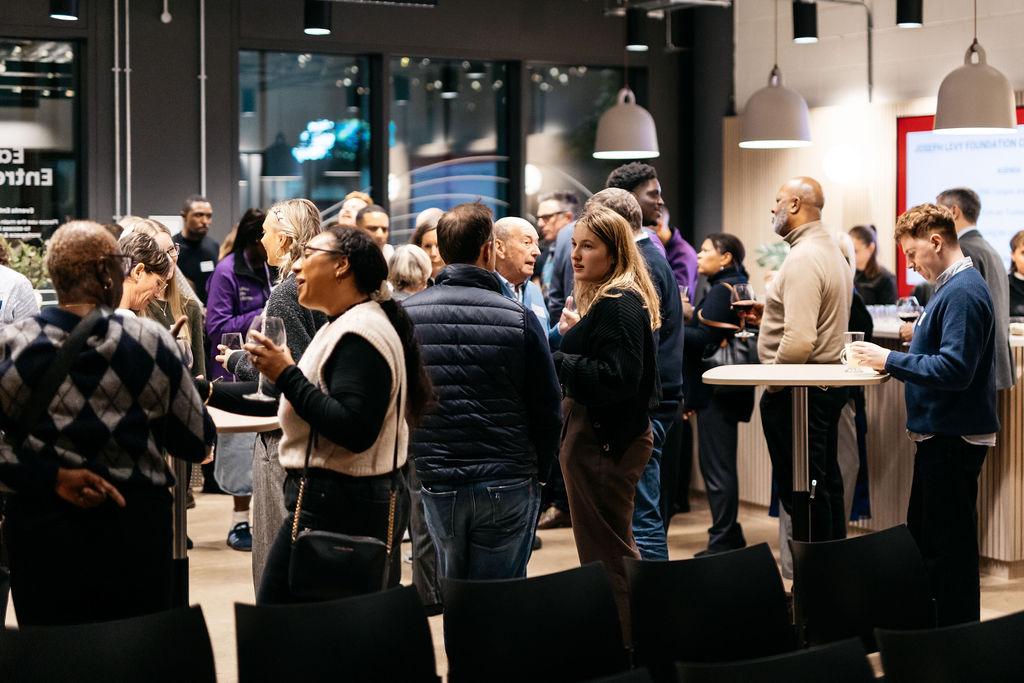
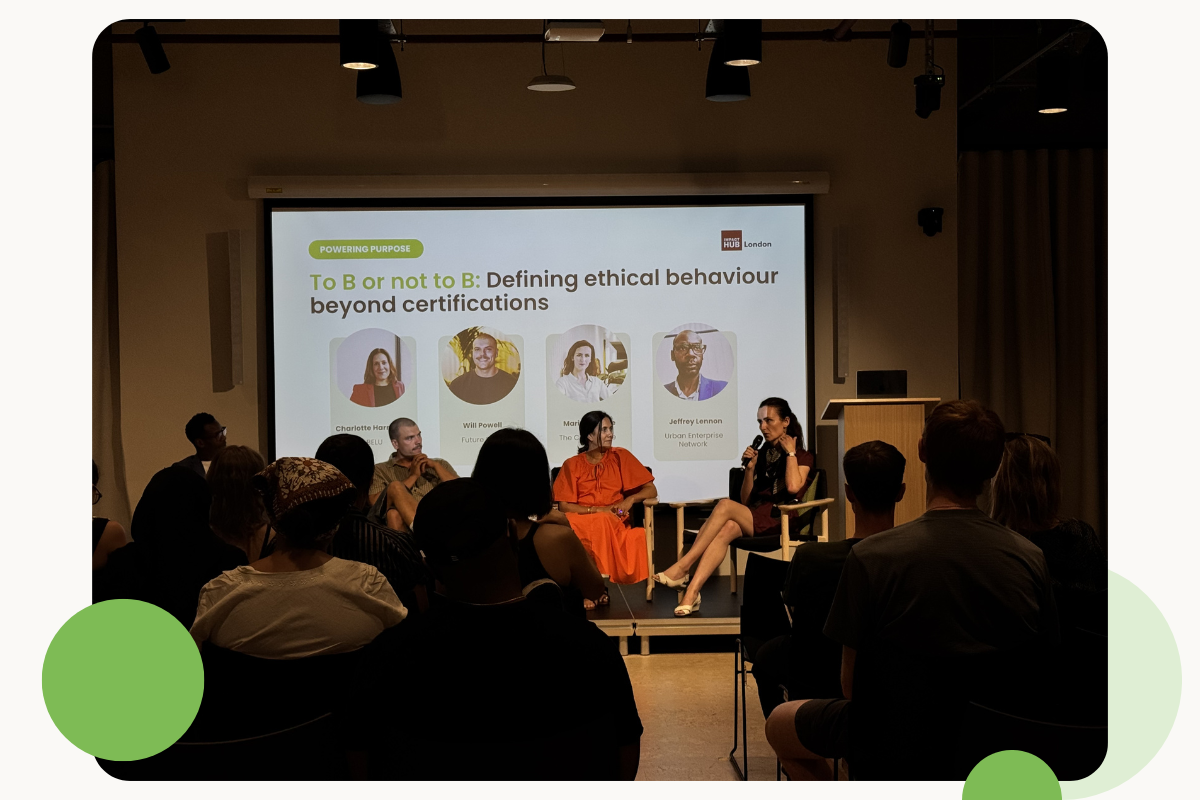
At Impact Hub London, we can see day in and day out just how many people care about sustainability – we see entrepreneurs trying to make a difference, investors using their funds for long-term good and our team helping to support this.
But it falters when systems, incentives, narratives and behaviours are misaligned with how humans actually think and act. Recognising these psychological and social barriers is not an excuse for inaction – it is a prerequisite for designing better solutions.
By addressing the human side of sustainability, we can turn ambition into action. Given that the various things occurring across the globe are rooted in human behaviour, if we look at the barriers but exclude the psychology behind them, we are missing a key piece to the puzzle.
If you want to chat about your experience, thoughts, concerns or perhaps ideas, you’re always welcome to join us for the day in our hub, at one of our events, or even hosting your own event with us. We’d love to be involved in your journey!
About Impact Hub London
About Impact Hub London
Impact Hub London supports purpose-driven organisations, entrepreneurs and leaders working to build more sustainable and inclusive economies. Through workspaces, events, programmes and partnerships, we create environments where ideas, collaboration and impact can thrive.
References and sources:
https://www.un.org/en/academic-impact/sustainability
https://www.pwc.com/gx/en/news-room/press-releases/2024/pwc-2024-voice-of-consumer-survey.html
https://www.sciencedirect.com/science/article/pii/S0272494425000738